


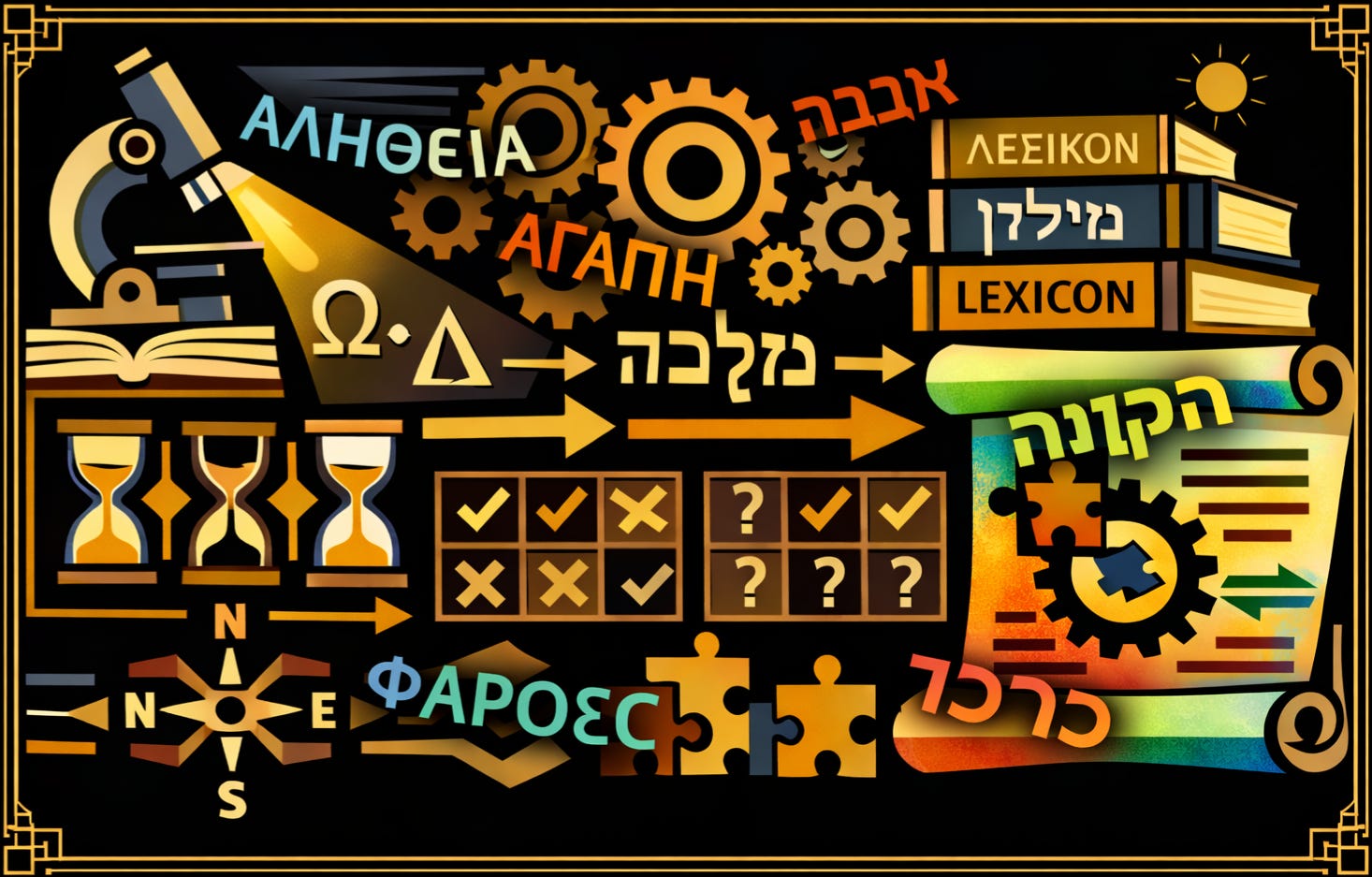
Why Translation Is Harder Than It Looks, and Why That Matters
One of the most important things to understand about translation is also one of the easiest to miss: interpretation does not announce itself. It rarely says, “Here I am.” Instead, it slips quietly into the text and begins to look like fact.
This is not a failure of honesty. It is a structural problem. Translation requires choices, and choices inevitably shape meaning. Once those choices are printed, spoken, or subtitled, readers and listeners tend to forget that alternatives ever existed.
That is why translation deserves to be taken seriously, not as a mechanical skill, but as a human responsibility.
Translation is not just knowing two languages
A common assumption is that if someone speaks two languages, they can translate. This is understandable, but it is wrong.
Many people grow up bilingual. In parts of Europe and elsewhere, this is entirely normal. Yet most bilingual people do not translate naturally. They switch. They operate in one language at a time. When one language is active, the other recedes.
Translation is different. It requires holding two linguistic systems open at once, mapping meaning between them, and constantly monitoring tone, implication, and audience impact. That is a specialized cognitive skill, and it is not evenly distributed.
This becomes obvious in high-stakes settings. At major political meetings, interpreters translating live between heads of state do not work continuously. They rotate. They are replaced frequently. There are well-documented cases of interpreters fainting when pushed too long. This is not drama. It is exhaustion. The brain is running at full capacity, making irreversible decisions in real time, with consequences that may shape history.
Translation at that level is not casual bilingualism. It is disciplined, demanding, and fragile work.
Why translation is vulnerable to distortion even when intentions are good
Most distortions in translation do not come from bad faith. They come from care.
A translator may want to clarify something confusing, soften something harsh, strengthen something they believe is important, or avoid language that might mislead or offend. These impulses are human and often generous. But they still shape meaning.
This is where translation resembles journalism. In news reporting, to be mathematically precise, nearly every sentence should be prefaced with “allegedly,” “according to,” or “as interpreted by.” Of course, no one writes that way. So interpretation quietly takes on the appearance of fact.
Translation works the same way. Each phrasing embeds an inference. Most readers never see the options that were not chosen, so the translation feels transparent. “That’s just what it says.” But what it says has already passed through a human filter.
The recurring hazards of translation (in plain language)
Because these problems recur so reliably, they have names. Below is not an exhaustive academic taxonomy, but a practical overview of the main translation hazards, described without technical jargon.
General translation hazards (apply to any text)
Register inflation
The translation sounds more formal, elevated, or ceremonial than the original.
Register deflation
The translation sounds too casual or modern compared to the source.
Semantic narrowing
A broad word in the original is rendered too narrowly in translation.
Semantic expansion
Extra meaning is added that the original text does not contain.
Idioms taken too literally
An expression is translated word-for-word instead of meaning-for-meaning.
Idioms over-explained
An expression is replaced with an explicit explanation that adds modern framing.
Narrative flattening
Distinct stages or voices in the original are blurred together.
Over-segmentation
The text is broken into too many small units, disrupting flow.
Process loss
Dynamic actions are turned into static states.
Sound and rhythm loss
Repetition, emphasis, or cadence disappears unintentionally.
Over-foreignization
The translation is so literal it becomes hard to read.
Over-domestication
The translation feels too modern or familiar, losing historical texture.
These hazards exist whether you are translating a novel, a poem, a legal document, or a speech.
Additional hazards specific to Bible translation
Bible translation adds another layer of difficulty, because the texts are ancient, culturally distant, and already surrounded by inherited language.
Inherited religious register
Traditional “Bible-sounding” language introduces formality that the original does not carry.
Doctrinal pre-resolution
Ambiguities are resolved in favor of later theology.
Liturgical gravity creep
Narrative prose begins to sound like ritual or chant.
Divine name handling drift
Different names or titles for God are flattened or made inconsistent.
Verse structure contamination
Verse numbering shapes wording or paragraphing.
Canonical echo bleed
Later biblical texts influence earlier ones improperly.
Moralization drift
Description quietly turns into instruction.
These hazards are not evidence of incompetence. They are the natural pressures of translating texts that matter deeply to people.
Why people insist on reading originals
This is why people are repeatedly told that great works “should be read in the original language if possible.” It is not elitism. It is grief for what gets lost.
Some people learn entire languages solely to read one author without mediation. This is common in literature, philosophy, and religious studies. Academics continue to teach Shakespeare in early modern English because they know that modernized versions lose something essential, even when the plot survives intact.
This is also why access to an “original language” does not solve the problem as cleanly as people often assume. Modern Greek speakers do not read the Greek of the New Testament fluently without training and translation. The alphabet is familiar. Much of the vocabulary overlaps. But syntax, usage, and meaning have shifted enough that confidence outpaces comprehension. Familiarity creates the feeling of direct access, not the reality of it. This is one of the most persistent traps in translation: when a language looks close enough that its differences stop being noticed.
Even within the same language, translation across centuries is hard. Modern readers need help with Shakespeare. Modern Greek speakers need help with ancient Greek texts. Language changes. Idioms die. Tone shifts. Meaning migrates.
Translation difficulty does not disappear just because the language’s name stays the same.
Why this work deserves respect
In an era where technical fields are often held up as the pinnacle of seriousness, it is worth saying plainly: translation is not a soft skill. Translating works of art, political speech, religious texts, or human testimony across cultures is a demanding, disciplined practice.
It involves:
cognitive endurance
emotional restraint
ethical judgment
humility about one’s influence
Character matters. A translator’s honesty, patience, and resistance to self-importance shape outcomes in ways that are rarely visible but deeply real.
This does not mean other fields lack moral stakes. Many do. But translation has a unique burden: it mediates meaning itself. When it goes wrong, misunderstanding is not an accident. It is structural.
A final orientation
Translation is not a problem to be solved once and for all. It is an ongoing responsibility.
The goal is not perfect neutrality, which does not exist. The goal is awareness, restraint, and care. To know where distortion is likely, and to resist it where possible.
For readers, simply knowing that this process exists changes how a text is received. It introduces a small pause between words and conclusions.
And that pause matters.

For a broader orientation to why these problems exist at all, see: When Meaning Slips While Words Remain.
These same pressure points are visible throughout the Bible reading and translation project hosted here: Live-Wire Bible Study.
When Meaning Slips While Words Remain

Words go in on one side, equivalent words come out on the other, and meaning passes through more or less intact. This is how translation is often imagined: a clerical task, largely mechanical, requiring care but little judgment. If that were true, translation would be easy, fast, and largely solved by machines. The fact that it is not tells us something…
Why Some Ancient Texts Feel Strange to Modern Readers

There are insights you register and move on from.
This one turns the house around.
About power, and how it hides inside what feels obvious.
An anthropological example from the Bible
FeedTheGoodHorse — A Live-Wire Way of Reading the Bible

The Bible is approached here as a cultural and psychological text, without enforcing or even just asserting doctrinal conclusions.
If you are skeptical and want to read it as a serious human text, you are welcome here. If you are drawn to God but wary of religious systems, you are welcome here too. If you are a Christian tired of proof-texts and “it’s biblical” as a power move, you are welcome here.