


For a while, anger is the only thing that makes sense.
It cuts through fog. It stops the endless explaining. It lets you see what was happening without immediately softening it or taking responsibility for it. Suddenly you can say no. Suddenly you can stop cooperating.
That matters. Anger often shows up at the exact moment something inside you refuses to be bent any further.
Early on, anger is outward-facing.
It says, “This crossed a line.”
It gives you edges again.
That kind of anger is not a problem. It’s often the first honest response after a long stretch of pressure, manipulation, or quiet erosion. Without it, you might never separate what was done to you from what you were told was normal.
But anger has a point where it can turn.
Not all at once. Not dramatically.
Just enough that you might miss it.
At first, the anger is about stopping what’s wrong. Later, it can start orbiting something else. Replaying conversations. Imagining outcomes. Waiting for the moment when the other person finally understands, finally pays, finally feels it.
Revenge doesn’t always look violent or extreme. Often it’s private. Mental. Rehearsed while you’re doing other things. It can even feel stabilizing. Like balance is coming back into the world.
That pull doesn’t mean there’s something wrong with you. It usually means your sense of justice has woken up after being ignored for too long.
But here’s the shift to watch for.
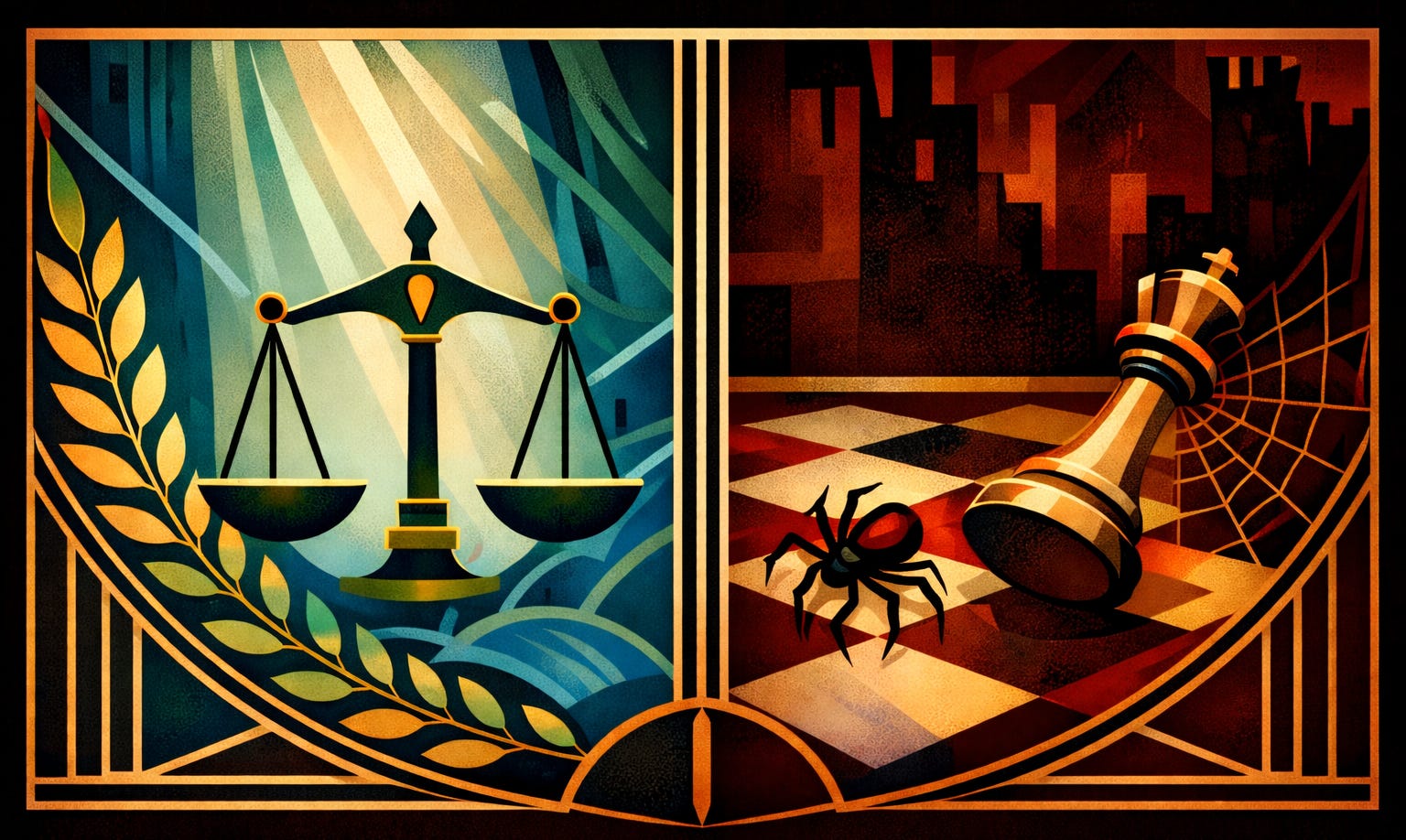
Anger points outward.
Revenge pulls everything inward.
Your attention tightens. Your story becomes heavier. Your inner life starts circling the injury. Even when nothing is happening on the outside, something is always running on the inside.
You may notice how much energy it takes just to carry it.
Anger, at its best, protects.
Revenge asks to be fed.
It wants time. It wants rehearsal. It wants confirmation. It keeps the original harm warm so it doesn’t fade before it’s “resolved.”
And resolution, in this mode, depends on what happens to someone else.
That’s the trap.
Not because justice is wrong.
Not because anger is sinful.
But because your life starts waiting on an outcome that may never come.
Churches often push forgiveness right here, and that’s just another kind of pressure. Being told to forgive before you’re ready is not healing. It’s a demand to absorb damage quietly and call it virtue.
This isn’t that.
This is about noticing when a force that helped you stand up is starting to harden into something that owns you.
Anger is very good at helping you leave what harmed you.
It is not very good at telling you how to live afterward.
Revenge can feel like strength because it restores a sense of power. But over time, it narrows the world. Everything starts to relate back to what was done, what should happen, what would make things feel even.
You don’t have to forgive.
You don’t have to reconcile.
You don’t have to make peace with anything yet.
But there is a quiet question that eventually shows up, whether you invite it or not:
Is what’s driving you still protecting your life, or is it starting to consume it?
You don’t need to answer that today.
Just noticing that the question exists is already a change in direction.